

Industrial fluid movement often relies on internal displacement technologies that have been refined over time. Two common designs used across a range of sectors—including food processing, chemical handling, and water treatment—are bombas de rotor helicoidal y rotary gear pumps. While both are categorized as positive displacement pumps, they operate through different mechanical principles, making each better suited for specific types of fluid handling tasks.
The Operational Mechanics of Progressive Cavity Pumps
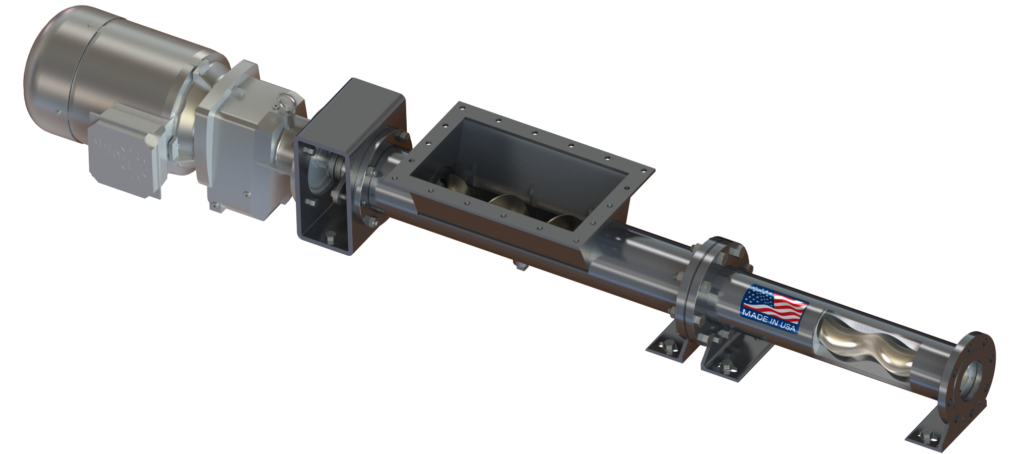
A bomba de rotor helicoidal operates through a simple yet ingenious mechanism: a helical metal rotor rotating inside a flexible, double-helical elastomer stator. As the rotor turns, it forms a series of isolated, moving cavities that transport the fluid from the suction side to the discharge side.
Because of this unique design, the fluid moves in a steady, continuous stream with very little pulsation. This is particularly valuable when handling delicate or shear-sensitive fluids that might be damaged by the high-speed turbulence often found in other pump types. The movement is essentially a “sliding” action rather than a high-velocity squeeze.
In many industrial applications, the choice to use these pumps is driven by the need to manage fluids that are highly viscous or contain suspended solids. Because the internal cavities are designed with generous clearance and smooth transitions, they can transport materials that might otherwise clog or damage more sensitive pump components. The ability of this technology to maintain a constant flow rate even when discharge pressure fluctuates is a consistent advantage in many processing environments.
The Mechanics of Rotary Gear Pumps
In contrast, a rotary gear pump uses the intermeshing of two or more gears to transport fluid. As the gears rotate away from each other at the suction port, they create a vacuum that pulls the fluid into the gaps between the gear teeth. The fluid is then carried around the outside of the gears to the discharge side, where the re-meshing of the teeth forces the fluid out of the pump.
This design is characterized by extreme precision and reliability. The internal tolerances in a rotary gear pump are often very tight, which is what allows it to handle thin or medium-viscosity fluids with excellent efficiency. Because there is a direct metal-to-metal—or close-tolerance—relationship between the rotating parts, these pumps are well-regarded for their ability to maintain high pressure and move fluids over long distances or through restrictive plumbing.
These pumps are frequently favored in applications involving lubrication, fuel transfer, or hydraulic oil movement. Since the operation depends on the precise fit of the gears, they are typically less effective at handling large, abrasive solids, which could potentially cause wear at the points where the gears meet. However, for clean, non-abrasive fluids, their durability and longevity in constant-duty service are frequently cited as primary benefits.
Evaluating Performance Differences for Specific Tasks
When comparing these two technologies, it is helpful to consider how each one handles the physical properties of the fluid. A bomba de rotor helicoidal is often the first choice when the fluid has a high viscosity, such as slurries, sludge, or heavy food pastes. The internal geometry allows these materials to move without being churned. If you are working in an environment where the fluid viscosity varies significantly, the bomba de rotor helicoidal can typically maintain consistent output despite those changes.
Conversely, a rotary gear pump is often favored for its efficiency with lower-viscosity fluids and its ability to provide a precise, repeatable volume of fluid per revolution. This makes them common in dosing or metering applications where accuracy is the primary objective. If the goal is to transfer thin liquids at high pressures, the gear design often provides a more compact and energy-efficient solution compared to a cavity-based system.
Understanding these trade-offs requires looking at the overall process goals. A user should ask: Is the fluid likely to change in thickness? Are there solids present that need to remain intact? Does the system require a precise metered flow, or is a steady transfer rate sufficient? Answers to these questions typically narrow the field of options significantly.
Sustaining Long-Term Performance Through Proper Selection
Regardless of the technology chosen, the longevity of either a bomba de rotor helicoidal or a rotary gear pump depends heavily on correct installation and proactive maintenance. For those relying on these systems for daily operations, establishing a routine schedule for inspection is a standard best practice.
For the bomba de rotor helicoidal, the focus often remains on the condition of the elastomer stator. Over time, the constant contact with the rotor can lead to wear, especially if the fluid contains abrasive particles. Regularly checking for changes in flow rate or pressure can act as an early indicator that the stator may eventually require adjustment or replacement.
With the rotary gear pump, maintenance priorities typically shift toward monitoring the gear teeth and shaft seals. Because these pumps operate on tight tolerances, even minor wear on the gears can reduce efficiency. Maintaining a clean fluid environment, free from debris that could score the gear surfaces, is the most effective way to ensure the pump continues to operate as intended.
Both pump types are essential components in modern industrial fluid handling. By matching the mechanical strengths of the design to the specific requirements of the fluid and the demands of the operating environment, businesses can build a system that is both reliable and efficient. As operational needs evolve, having a clear understanding of these functional differences ensures that the right tools are in place to keep processes moving.
 Spanish
  English