

Industries that deal with difficult fluids—such as sludges, slurries, pastes, resins, oils, and abrasive mixtures—require pumping systems that can maintain performance despite extreme viscosity levels, solids content, and unpredictable flow conditions. Traditional pumps quickly lose efficiency when faced with thick or abrasive materials, leading to downtime, excessive wear, and rising operational costs.
This is where the bomba de rotor helicoidal stands out as one of the most effective pumping technologies available today. Its ability to deliver consistent flow, tolerate abrasive materials, handle shear-sensitive fluids, and maintain efficiency across a wide range of viscosities makes it indispensable in industries such as wastewater treatment, chemical processing, oil and gas, mining, food manufacturing, agriculture, and more.
While other pump designs—such as centrifugal pumps or a chemical gear pump—serve important roles, the progressive cavity pump offers unique advantages that make it essential for handling challenging fluids. Below, we explore what sets these pumps apart and why they have become a trusted solution across multiple heavy-duty environments.
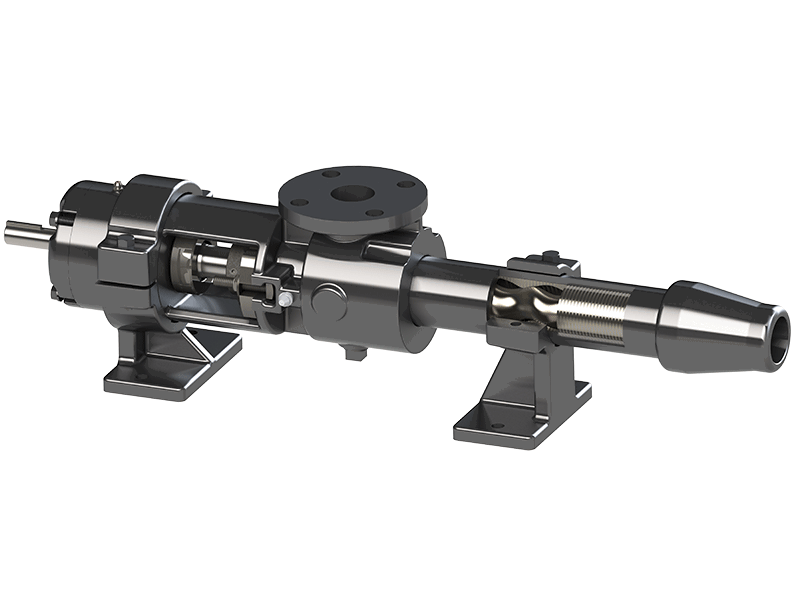
A progressive cavity pump (PC pump) is a type of positive displacement pump that uses a single helix rotor turning inside a double-helix stator. As the rotor rotates, cavities are formed that move fluid in a smooth, continuous motion.
The working principle offers important advantages:
- Steady, uniform flow without pulsation
- Minimal agitation, ideal for shear-sensitive materials
- Consistent pumping regardless of pressure variations
- Strong suction for thick or slow-moving fluids
- Self-priming capability even in challenging environments
This design allows the progressive cavity pump to maintain precise, reliable output even when fluid viscosity changes drastically—something many other pump types struggle with.
Viscosity is a major limiting factor for many pump designs. As fluids become thicker, they resist flow, increase internal pressure, and cause greater stress on pump components.
The progressive cavity pump excels in these conditions.
It is ideal for handling:
- Sludge and slurry
- Heavy crude oil
- Molasses and syrups
- Pastes and gels
- Cementitious mixtures
- Paints, coatings, and adhesives
- Polymer resins
- High-solids wastewater material
Because PC pumps create sealed cavities that physically move the fluid forward, viscosity has minimal impact on overall performance.
In contrast, centrifugal pumps lose efficiency when viscosity rises, and even a chemical gear pump may face challenges when fluids contain large solids or require gentle handling.
A major challenge in pumping abrasive fluids—such as sand-filled slurries, mineral suspensions, or wastewater sludge—is preventing wear on internal components. Abrasive particles can scour surfaces, destroy seals, and reduce pump lifespan.
The progressive cavity pump is designed to minimize wear by:
- Reducing internal velocity
- Eliminating sharp directional changes in fluid flow
- Using elastomer stators that absorb abrasion
- Keeping metallic components away from direct abrasion paths
Because the pumping mechanism is smooth and controlled, abrasive materials move through the pump without causing the grinding action seen in other pump types.
This results in longer pump life, fewer repairs, and significantly lower operating costs.
Many industrial fluids contain solids—either hard particles, soft organic matter, or fibrous materials. Instead of clogging or jamming the pump, a progressive cavity pump can move solids along with the fluid.
It handles solids such as:
- Food particulates
- Biomass
- Fibers and pulp
- Sand and grit
- Chemical crystals
- Mineral slurries
The large cavities inside the pump allow solids to pass without breaking apart or blocking flow. This makes PC pumps indispensable in wastewater treatment, agriculture, and industrial processing applications.
Some materials—like emulsions, biological media, fruit pulp, polymers, or cosmetic formulations—are sensitive to shear. High shear can cause:
- Product breakdown
- Changes in texture or viscosity
- Reduced quality
- Separation or foaming
- Process inconsistencies
The progressive cavity pump’s slow, controlled movement and pulsation-free flow protect delicate fluids. In contrast, pumps like centrifugal models or even a chemical gear pump may impart higher shear forces, making them unsuitable for such materials.
6. Stable Flow Regardless of Pressure or Viscosity Changes
In many industrial processes, fluid characteristics are unpredictable. Material can thicken, separate, cool, heat, or contain variable solids content—all of which can impact pump performance.
A progressive cavity pump consistently delivers:
- Stable flow
- Precise dosing
- Predictable output
It does not rely on fluid velocity or pressure to maintain performance, which makes it ideal for applications such as:
- Polymer dosing
- Sludge transfer
- Chemical processing
- Food ingredient metering
- Wastewater treatment
PC pumps maintain flow accuracy even under changing conditions, reducing the risk of process disruptions.
7. Excellent Suction Capabilities for Difficult Materials
Thick or sticky fluids often resist being drawn into a pump, making strong suction essential. Progressive cavity pumps provide excellent suction lift, often outperforming traditional pump types.
Suction advantages include:
- Ability to pump from deep pits or tanks
- Handling of semi-solid materials
- Self-priming operation
- Consistent inlet performance even with poor feed conditions
This suction capability makes PC pumps highly dependable in environments where material flow into the pump may be inconsistent.
8. Versatility Across Countless Industrial Applications
Due to their adaptability, progressive cavity pumps are used in more industries today than nearly any other positive displacement pump.
Common applications include:
- Wastewater treatment – Sludge, scum, biosolids
- Food and beverage – Juices, purees, sauces
- Oil and gas – Crude oil, drilling mud
- Minería – Tailings, mineral slurries
- Agricultura – Manure handling, feed mixtures
- Chemical manufacturing – Resins, polymers, corrosive liquids
- Construcción – Cementitious products, grout, mortar
While a chemical gear pump is excellent for precise metering of clean chemicals, the progressive cavity pump handles materials that are too viscous, abrasive, or solids-heavy for gear pump use.
9. Reduced Maintenance and Long Service Life
Even though PC pumps handle harsh materials, they typically require less maintenance than traditional pump types. Their simple internal design—with only one major moving part—reduces failure points.
Maintenance benefits include:
- Predictable wear patterns
- Easy rotor and stator replacement
- Lower overall operating costs
- Long service intervals
- Minimal downtime
The robust construction also means PC pumps can operate continuously in demanding environments without frequent breakdowns.
10. Energy Efficiency Compared to Other Pump Designs
Because progressive cavity pumps move fluid with a smooth displacement action rather than relying on high-speed rotation or turbulent flow, they often operate more efficiently—especially with viscous materials.
Energy-saving advantages:
- Lower power consumption
- Efficient operation at low speeds
- Reduced heat generation
- Less wasted motion
In high-viscosity or high-solids applications, they typically outperform centrifugal pumps in terms of energy use.
11. Ability to Scale From Small Precision Pumps to Large Industrial Units
One of the overlooked benefits of progressive cavity pumps is their scalability. They can be engineered for small laboratory dosing or massive industrial transfer operations.
Available configurations include:
- Compact dosing pumps
- High-volume sludge transfer pumps
- Hopper-fed pumps for semi-solid materials
- Sanitary designs for food processing
- Abrasion-resistant mining pumps
- Chemical-compatible pumping systems
This flexibility ensures that PC pumps meet the unique needs of virtually any industry.
12. Reliable Performance Where Other Pumps Fail
Progressive cavity pumps are often the chosen solution in environments where centrifugal, diaphragm, or even a chemical gear pump experiences issues such as:
- Cavitación
- Loss of prime
- Excessive wear
- Clogging
- Inconsistent flow
The PC pump’s rugged design and positive displacement mechanism allow it to perform reliably under conditions that overwhelm other pump types.
The Progressive Cavity Pump Is Indispensable for Tough Fluid Handling
For industries dealing with viscous, abrasive, or solids-laden fluids, the bomba de rotor helicoidal has earned its place as an essential piece of equipment. Its ability to deliver stable flow, handle challenging materials, minimize wear, and protect delicate fluids makes it one of the most versatile and durable pump technologies available.
While a chemical gear pump offers exceptional precision for clean, low-viscosity fluids, the progressive cavity pump remains unmatched for heavy-duty applications involving thick, abrasive, or unpredictable mixtures.
From wastewater plants to food production lines and from chemical facilities to mining operations, PC pumps enhance efficiency, reduce maintenance, and keep operations running smoothly—even under the toughest conditions.
 Spanish
  English