

The next time you bite into a perfectly tempered chocolate truffle or watch molten ganache cascade over a cake, consider the invisible engineering marvels at work. Chocolate pumps form the backbone of modern confectionery manufacturing, precisely moving everything from thick cocoa liquor to silky finished chocolate without compromising texture or flavor. These specialized pumps, often paired with sophisticated divisores de caudal, ensure consistent production quality across global factories. This exploration reveals the technology, challenges, and innovations powering the $130 billion chocolate industry.

The Unique Challenges of Pumping Chocolate
Chocolate defies ordinary pumps. Its complex rheology—shear-thinning behavior where viscosity drops under pressure, combined with yield stress—requires gentle handling. Unlike water or oil, chocolate contains 20-40% solid particles (cocoa, sugar, milk powder) suspended in cocoa butter. Chocolate pumps must maintain suspension without causing phase separation or fat bloom (that white film ruining premium bars).
Temperature control proves critical. Chocolate processes between 40-50°C (104-122°F), where cocoa butter stays liquid. Too hot risks flavor degradation; too cold causes solidification. Flow dividers enter here, splitting molten chocolate into multiple streams for tempering machines, enrobers, or molding lines while maintaining identical flow rates and temperatures across outlets.
Engineering Marvels: Types of Chocolate Pumps
Chocolate pumps fall into two categories: rotary lobe / circumferential piston pumps and internal gear pumps. Both excel with high-viscosity fluids (up to 25,000 cSt for dark chocolate).
Rotary Lobe Pumps feature three or four lobes rotating in timed sequence, creating gentle, low-shear transfer. Benefits include:
- Reversible flow for easy cleaning
- Front-loading seals for quick maintenance
- Stainless steel construction preventing discoloration
- Variable Frequency Drive (VFD) compatibility for precise speed control
Internal Gear Pumps use an outer helical gear driving an inner crescent-shaped gear. Their strength lies in handling chocolate liquor (cocoa mass + butter) up to 100,000 cSt. Tight clearances minimize slip, ensuring metering accuracy within ±1%.
Flow dividers—synchronous gear motors or rotary piston designs—guarantee equal distribution. A single pump feeding four molding lines demands identical flow; even 2% variation causes underfilled or overflowed molds, ruining batches.
Precision Manufacturing: Materials That Won’t Taint Flavor
Food safety demands 316L stainless steel bodies, electro-polished to Ra 0.8µm surface finish (smoother than glass). Gears receive hard chrome plating or use FDA-approved PEEK plastic composites. Elastomers like Viton or EPDM withstand cocoa butter’s solvents without swelling.
Chocolate pumps incorporate heated jackets maintaining 45°C process temperatures. Jacketed divisores de caudal prevent downstream temperature drops. Magnetic couplings eliminate mechanical seals entirely, achieving zero leakage—a godsend for sanitary HACCP compliance.
Hygienic design follows 3-A Sanitary Standards:
- Crevice-free construction
- Tool-less disassembly
- Electropolished internals
- EHEDG (European Hygienic Engineering Design Group) certification
Critical Applications Across Chocolate Production
Chocolate pumps power every manufacturing stage:
1. Cocoa Processing
Tri-lobe booster pumps transfer cocoa liquor from grinders to conches. Flow dividers feed multiple refining lines simultaneously.
2. Ingredient Dosing
Metering pumps inject precise milk powder, emulsifiers, and flavorings. Accuracy within 0.5g per 1000kg batch determines flavor consistency.
3. Tempering Lines
Jacketed gear pumps maintain 27-29°C precise temperatures through crystallizers. Flow dividers supply enrobers, coaters, and depositors equally.
4. Molding and Enrobing
High-pressure lobe pumps push chocolate through hundreds of mold cavities simultaneously. Pulsation-free flow prevents air entrapment, causing pinholes.
5. Recycling
Reclaim pumps return off-spec chocolate to melters, reducing waste 15-20%.
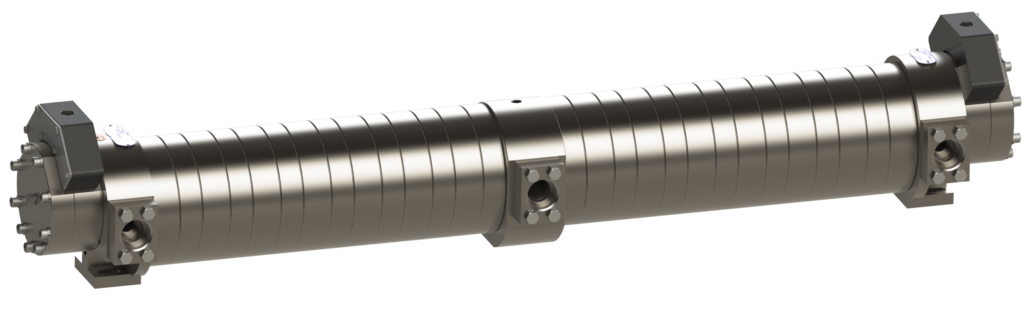
Flow Dividers: The Unsung Heroes of Production Lines
Flow dividers solve chocolate’s biggest headache: inconsistent distribution. Synchronous designs use identical gear sets driven by single motor shafts—no electronics needed. Volumetric dividers handle temperature fluctuations better than electronic controllers.
Consider a four-stream tempering line: Stream A runs 5m longer pipe than Stream D. Without compensation, Stream D starves while Stream A overflows. Precision divisores de caudal maintain ±1% accuracy across all outlets regardless of downstream resistance.
Cleaning Challenges and Innovations
Chocolate solidifies instantly when cooled below 27°C, creating cleaning nightmares. Chocolate pumps incorporate:
- CIP (Clean-In-Place) hot water/glycol systems maintaining 50°C
- Heated manifolds preventing downstream blockages
- Reversible lobe rotation flushing dead zones
- Dry running capability for final air purging
Automated sequences run 60-minute cycles: hot detergent flush → rinse → sanitize → hot air dry. Stainless construction prevents flavor carryover between milk and dark chocolate batches.
Energy Efficiency and Sustainability Advances
Modern bombas de chocolate slash energy 30-40% versus older designs:
- Permanent magnet motors replace induction motors
- VFDs match pump speed to demand
- Low-friction gear coatings reduce power draw
- Heat recovery systems preheat incoming chocolate
Variable displacement divisores de caudal adjust output proportionally to line speed, eliminating bypass waste. Some factories report ROI within 18 months from energy savings alone.
Sizing and Selection: Getting Capacity Right
Chocolate pumps size by viscosity-temperature profile:
Cocoa Butter (40°C): 50 cSt → 10 GPM pumps
Milk Chocolate (45°C): 5,000 cSt → 3 GPM pumps
Dark Chocolate (50°C): 25,000 cSt → 1 GPM pumps
Flow dividers scale identically: 1:1, 1:2, 1:4 ratios are common. Oversizing wastes energy; undersizing causes cavitation, destroying gears.
Maintenance Secrets for 20,000+ Hour Service Life
Preventive maintenance extends pump life dramatically:
- Weekly: Check heated jacket temperatures
- Monthly: Verify VFD current draw (±10% baseline)
- Quarterly: Disassemble, inspect gear clearances (0.15-0.25mm spec)
- Annually: Replace mechanical seals proactively
Vibration analysis detects gear wear 3 months early. Ultrasonic leak detection finds seal failures before contamination occurs.
The Future: Smart Chocolate Processing
Industry 4.0 transforms bombas de chocolate:
- IoT sensors monitor pump signatures 24/7
- Predictive analytics forecast failures 60 days ahead
- Digital twins optimize designs pre-manufacture
- Blockchain traceability links pumps to finished chocolate batches
AI-driven recipe optimization adjusts pump speeds dynamically based on real-time rheology measurements. Variable frequency divisores de caudal respond to downstream demand fluctuations instantly.
Why Chocolate Pumps Define Manufacturing Excellence
Chocolate pumps y divisores de caudal represent precision engineering, solving materials science’s toughest challenges. Single-digit micron tolerances, heated fluid dynamics, sanitary perfection—these aren’t commodities but mission-critical components where 0.1% performance matters.
Factories producing 100 tons daily can’t afford pump failures costing $5,000/hour. Leading manufacturers guarantee performance through computational fluid dynamics modeling, finite element stress analysis, and 1,000-hour factory acceptance tests.
Next time you savor that perfect chocolate texture, remember the engineering symphony making it possible. From molten liquor to molded masterpiece, bombas de chocolate deliver flawlessly—batch after flawless batch.
 Spanish
  English