
Every time you fill up your car, a massive ship delivers crude oil across oceans, or a factory churns out products, fabricantes de bombas de aceite work silently behind the scenes. These precision engineers design the heartbeat of industrial operations—pumps that move everything from crude petroleum to synthetic lubricants with unerring reliability. Among their most ingenious creations? Oil gear pumps are mechanical marvels that deliver consistent flow under extreme pressures. This deep dive explores what makes these manufacturers essential, how they innovate, and why their work powers our modern world.
The Critical Role of Oil Pump Manufacturers in the Global Industry
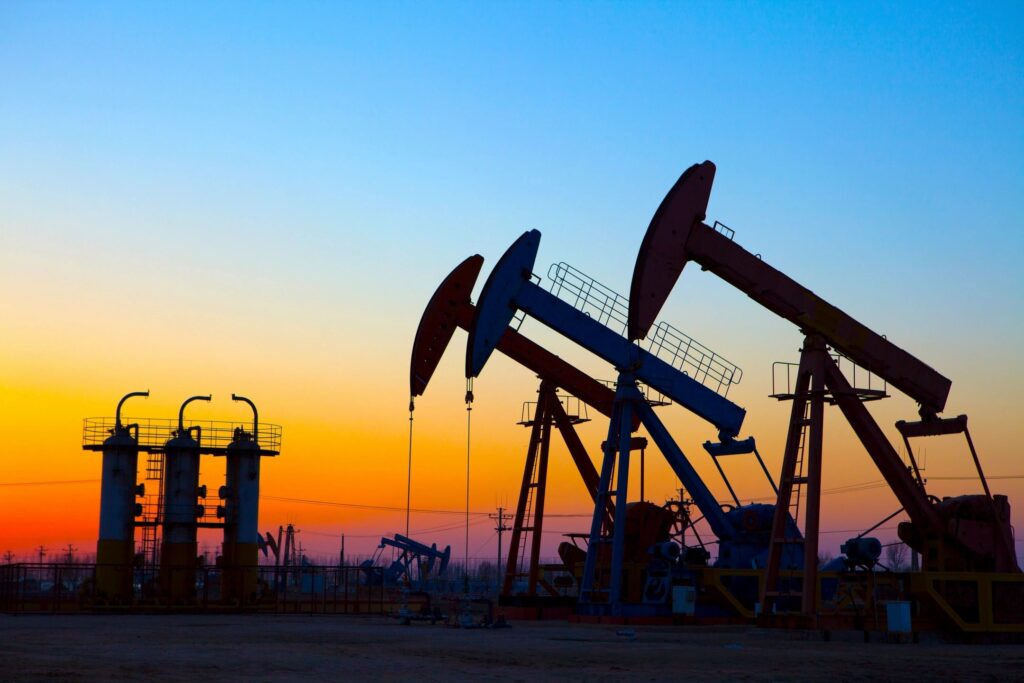
Oil pumps aren’t just mechanical parts—they’re the lifeblood of energy infrastructure. Oil pump manufacturers supply equipment for upstream exploration (drilling rigs), midstream transportation (pipelines, tankers), and downstream refining (processing plants). A single refinery might use hundreds of pumps operating 24/7, each customized for specific viscosities, temperatures, and pressures.
These companies invest heavily in metallurgy and fluid dynamics research. Modern pumps handle everything from light naphtha (-40°C) to heavy bitumen (200°C+), resisting corrosion from hydrogen sulfide and abrasive sand particles. Reliability matters most: a single pump failure can cost $100,000+ per hour in downtime for large operations. That’s why top fabricantes de bombas de aceite guarantee MTBF (Mean Time Between Failures) ratings exceeding 20,000 hours.
Mastering the Science of Oil Gear Pumps
Oil gear pumps represent precision engineering at its finest. Unlike centrifugal pumps that rely on impeller speed, gear pumps use interlocking gears (helical, spur, or herringbone) to trap and move fluid positively. This design delivers:
- Pulse-free flow: Essential for metering applications
- High pressure capability: Up to 250 bar (3,600 PSI)
- Viscosity independence: Handles 1cP water to 100,000cP bitumen
- Self-priming: Starts instantly without air pockets
External gear pumps dominate low-to-medium pressure applications (lubrication systems), while internal gear pumps excel with viscous fluids. Manufacturers precision-machine gears to micron tolerances, using hardened steel, bronze, or carbide coatings. Shaft seals—mechanical, lip, or magnetic—prevent leaks that could ignite flammable vapors.
Recent innovations include adjustable clearance gears that adapt to wear, extending service life by 300%. Variable speed drives pair with oil gear pumps for energy savings up to 40% while maintaining flow precision.
Material Science: Building Pumps That Conquer Harsh Environments
Oil pump manufacturers battle corrosion, erosion, and thermal expansion daily. Common materials include:
| Componente | Material Options | Best Applications |
|---|---|---|
| Gear Body | Ductile Iron, Stainless 316 | Crude oil, refined products |
| Gears | Hardened Steel, PEEK | High pressure, chemicals |
| Shafts | Alloy Steel 4340 | High torque transmission |
| Seals | Viton, Kalrez | High temperatures |
API 674 and ISO 5208 standards dictate construction. For sour service (H2S environments), NACE MR0175-compliant “sour gas” materials prevent sulfide stress cracking. Cryogenic pumps use liquid nitrogen-shrunk interference fits for zero-leakage performance.
Customization: Why One-Size-Never-Fits-All in Industrial Pumping
Generic pumps fail in industrial applications. Leading fabricantes de bombas de aceite offer API-compliant customization:
- Capacity: 0.1 to 10,000 GPM
- Pressure: 10 to 3,500 PSI
- Temperatura: -100°F to 800°F
- Viscosity: 0.5 to 1,000,000 SSU
Oil sands operators demand heated gear pumps with steam jackets. FPSO vessels (Floating Production Storage Offloading) need explosion-proof, self-leveling baseplates. Refineries specify tandem pump arrangements for redundancy. Each design undergoes CFD (Computational Fluid Dynamics) modeling and FEA (Finite Element Analysis) before prototype testing.
Navigating the Competitive Landscape of Oil Pump Manufacturing
The industry splits into giants serving megaprojects and specialists dominating niche applications. European manufacturers lead precision gear pumps; American firms dominate API 610 centrifugal pumps for refineries. Chinese production grows 15% annually but struggles with high-pressure reliability.
Key differentiators include:
- Lead times: 12-16 weeks standard, 4-6 weeks expedited
- Service networks: Global 24/7 support critical for offshore
- Spare parts: Guaranteed availability for 25+ years
- Testing: Hydrostatic, performance, and NPSH certification
Buyers evaluate the total cost of ownership, not the sticker price. A $50,000 premium pump saving 2% energy over 10 years returns $250,000+.
Digital Revolution: Smart Pumps and Industry 4.0 Integration
Oil gear pumps now connect to IoT platforms, transmitting:
- Vibration analysis (predictive maintenance)
- Temperature monitoring (cavitation detection)
- Flow verification (leak detection)
- Energy consumption tracking
Machine learning algorithms analyze pump signatures, predicting failures 30-90 days in advance. Digital twins—virtual pump replicas—optimize designs pre-manufacture. Remote monitoring slashes unplanned outages by 65%, per industry studies.
Sustainability Pressures Driving Innovation
Carbon reduction goals push fabricantes de bombas de aceite toward efficiency. Seales magnetic drive pumps eliminate fugitive emissions (1-2% of pumped volume in mechanical seals). Permanent magnet motors boost efficiency 5-10% over induction motors. Renewable integration grows: biodiesel pumps need elastomer compatibility testing; hydrogen cracking units demand new metallurgy.
Recycling initiatives recover 85% of pump materials. Extended producer responsibility laws require manufacturers to plan for end-of-life decommissioning.
Global Supply Chain Challenges and Solutions
Post-pandemic shortages exposed vulnerabilities. Rare earth magnets for premium motors face China export restrictions. 4140 alloy steel shortages delay gear production. Top manufacturers counter with:
- Domestic foundries reducing lead times 50%
- 3D-printed prototypes accelerating R&D
- Stockpiled critical spares for emergency deliveries
- Regional manufacturing hubs mitigating tariffs
The Future of Oil Pump Manufacturing: Electrification and Beyond
Electric submersible pumps (ESPs) now dominate artificial lift (60% market share). Electrification trends favor variable frequency drives over mechanical VFDs. Hydrogen and carbon capture applications demand entirely new pump classes—zero-leakage, high-differential pressure designs.
3D metal printing promises gears with internal cooling channels impossible via traditional machining. AI-driven generative design optimizes housing shapes for 15% weight reduction. Modular “plug-and-pump” platforms cut installation time 70%.
Buyer’s Checklist: Selecting Your Oil Pump Partner
- Verify API/ISO certifications for your application
- Demand performance curves at operating conditions
- Request material test reports (MTRs)
- Confirm global service capability
- Evaluate energy efficiency certifications
- Test references in similar applications
- Negotiate lifecycle pricing (pump + spares + service)
Expect 3D models, virtual reality factory tours, and lifetime engineering support from serious contenders.
Engineering the Invisible: Why Oil Pump Manufacturers Matter
Next time you see a refinery flare stack glowing or a tanker gliding into port, remember the fabricantes de bombas de aceite and their oil gear pumps working tirelessly behind the spectacle. These aren’t commodities—they’re precision instruments enabling modern civilization. From arctic oilfields to desert refineries, their engineering defeats physics itself, moving impossible fluids through impossible conditions.
The best manufacturers don’t sell pumps; they solve problems. They understand your throughput targets, maintenance cycles, and ROI expectations better than you do. In an industry where unplanned downtime costs $50/hour per pump, their expertise pays dividends measured in millions.
Quality fabricantes de bombas de aceite invest where others cut corners—materials science, CFD modeling, global service networks. Partner with those who treat your application like their own reputation depends on it. Because in mission-critical applications, it does.
 Spanish
  English