
Many industrial operations rely on the assumption that a general-purpose pumping solution is sufficient for most fluid-handling needs. This mindset often leads to persistent maintenance challenges, premature equipment wear, and diminished operational efficiency. The reality is that fluid characteristics—such as viscosity, solid content, and shear sensitivity—dictate the necessary mechanical design of a system. When handling complex or demanding media, utilizing equipment specifically engineered for those challenges typically leads to more stable and reliable performance.
Recognizing the limitations of standard pumping solutions
A frequent oversimplification is the belief that any pump capable of moving a fluid will perform reliably over an extended duration. In practice, standard centrifugal pumps often struggle when tasked with high-viscosity fluids or liquids containing suspended solids. These materials can induce internal turbulence, excessive friction, or cavitation, which forces the pump to operate outside of its optimal design envelope.
When a pump is mismatched to its application, the energy required to move the fluid tends to rise. This increased demand is frequently reflected in higher power consumption and greater stress on mechanical seals and motor bearings. Over time, these conditions often result in frequent repairs and unplanned downtime, which can be particularly disruptive in sensitive manufacturing environments. Understanding how a pump interacts with the medium it conveys is key to avoiding these common operational hurdles.
Why specialized design matters for fluid handling
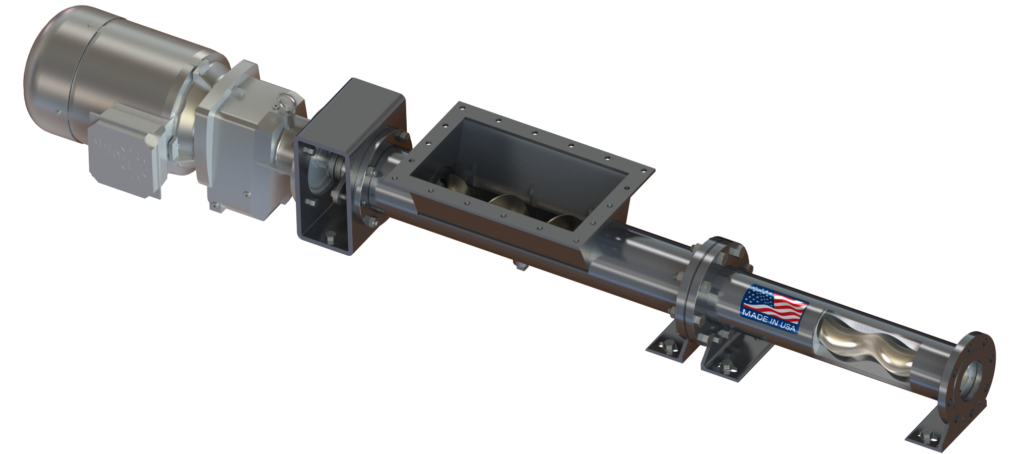
The engineering behind progressive cavity pumps addresses the challenges posed by difficult fluids through a distinct mechanical approach. By utilizing a helical rotor rotating within an internal stator, these pumps create a series of sealed cavities that move fluid from the intake to the discharge port. This continuous, low-pulsation flow is particularly useful for substances that are thick, abrasive, or shear-sensitive.
Several factors often make this style of pump a preferred choice for demanding industrial applications:
- Handling of varying viscosities: Systems designed with this geometry tend to maintain steady flow rates even as fluid viscosity changes.
- Reduced mechanical strain: Because the pumping mechanism does not rely on high-speed impellers, it can often process fluids with minimal agitation.
- Consistency in dosing: The positive displacement action allows for precise control over output, which is helpful in processes where accurate metering is required.
- Solid handling capabilities: The design allows for the passage of suspended solids without significant risk of clogging or degradation to the pump’s internal components.
When evaluating equipment for a particular process, operators should consider the specific physical properties of their media. The interaction between the rotor material, the stator elastomer, and the fluid itself is often a critical factor in the longevity and efficiency of the installation.
Considerations for selecting a manufacturing partner
When seeking oil pump manufacturers or suppliers of specialized positive displacement equipment, the selection process is about more than just matching a list of specifications. A reliable manufacturing partner provides insights into how the equipment will integrate into an existing system.
Thoughtful questions for a provider often include:
- How does the proposed equipment handle fluctuations in temperature or pressure during normal operation?
- What materials are available for the stator and rotor to ensure compatibility with specific chemical compositions?
- What maintenance protocols are recommended to ensure long-term stability and prevent premature wear?
- How does the manufacturer provide support regarding spare parts and technical documentation for long-term ownership?
Engaging with a manufacturer that prioritizes transparency about the limitations of their equipment, as well as its strengths, is often a sign of a high-quality organization. A provider should be able to explain the “why” behind their design choices, ensuring that the chosen hardware aligns with the operational goals of the facility.
Reframing the approach to industrial fluid systems
Rather than viewing a pump as a consumable piece of hardware to be replaced whenever it fails, it is more productive to view it as a foundational component of a larger process. When an industrial facility takes the time to assess their fluid characteristics and selects hardware designed specifically for those traits, they tend to move away from reactive maintenance and toward a more predictable operational model.
The difference often lies in the upfront assessment. By analyzing the flow requirements and fluid behaviors beforehand, operators can avoid the common pitfalls of forced adaptation. Investing in high-quality engineering—whether it is sourcing progressive cavity pumps for slurry transport or seeking experienced oil pump manufacturers for specialized lubricant delivery—is typically a shift in strategy. It is a move away from managing constant, preventable issues and toward maintaining a streamlined, efficient production environment.
The long-term value of this approach is measured in stability. When equipment is matched correctly to the application, it operates with less internal stress, consumes power more efficiently, and requires less frequent intervention. This allows the facility to allocate time and resources toward optimization rather than emergency repairs. For those managing complex fluid systems, the path forward often starts with acknowledging that the specific architecture of the pump is just as important as the motor driving it.
 English
  Spanish