

Deep within factories, oilfields, and wastewater plants, progressive cavity pumps perform feats of engineering that transform impossible fluid-handling challenges into routine operations. These positive displacement workhorses move everything from thick drilling mud to abrasive sewage with steady, pulse-free precision. When temperatures climb into extreme ranges, specialized high temp oil pump variants take center stage, circulating thermal fluids up to 400°C without compromising performance. This comprehensive guide reveals how these pumps work, why industries can’t live without them, and what makes them engineering marvels.
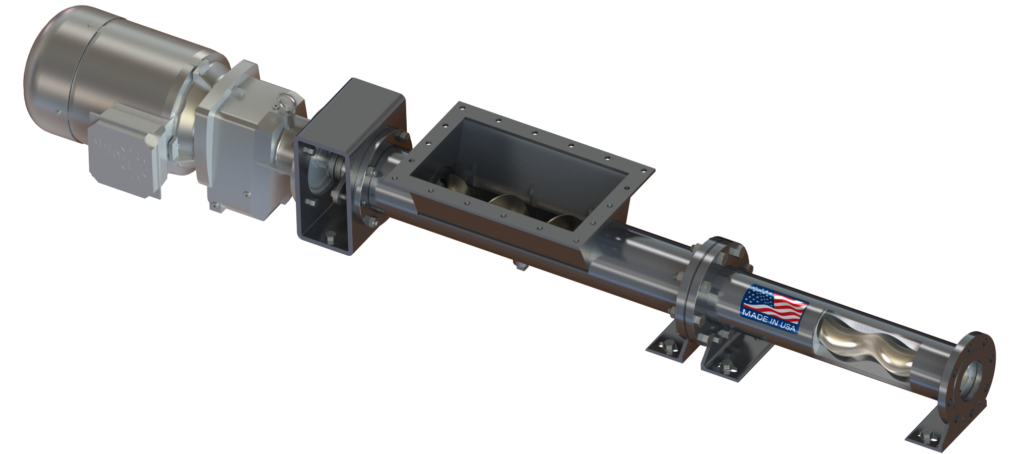
The Brilliant Mechanics of Progressive Cavity Pumps
Progressive cavity pumps operate on René Moineau’s 1932 genius—a single helical rotor spinning inside a double-helix stator. As the rotor turns, it forms progressive cavities that travel from suction to discharge, trapping fixed fluid volumes per revolution. Unlike gear pumps with tight clearances, PC pumps handle 70% entrained solids without clogging.
Key advantages include:
- Non-pulsating flow: Ideal for metering and shear-sensitive fluids
- Self-priming up to 28 feet: No foot valves needed
- Viscosity range: 1 cP water to 1,000,000 cP tar
- Pressure capability: Single stage 15 bar, multi-stage 48+ bar
The rubber stator—typically NBR, EPDM, or Viton—provides a compression fit while flexing around solids. Rotor materials range from chrome-plated steel for abrasives to PEEK for corrosive chemicals.
High Temp Oil Pump Applications: Engineering Under Fire
High temp oil pump configurations excel where ordinary pumps fail. Thermal oil systems powering asphalt plants, plastics extruders, and chemical reactors demand leak-free circulation at 150-400°C. These progressive cavity pumps use:
Specialized Materials:
- Hastelloy C-276 rotors resisting sulfide corrosion
- PTFE-lined stators handling 260°C continuous
- Magnetic drive couplings eliminate mechanical seals
- Inconel springs maintain compression at temperature extremes
Thermal Management:
- Jacketed housings circulating coolant around the stator
- Ceramic-coated rotors reduce thermal expansion mismatch
- Universal joint designs compensating for 0.5% linear expansion per 100°C
Downstream refining processes use high temp oil pump units transferring vacuum residuum (400 cSt at 200°C) to crackers without cavitation.

Industry Applications Where PC Pumps Shine
Progressive cavity pumps solve diverse challenges:
Oil & Gas:
- Drilling mud transfer (up to 40% solids)
- Crude oil offloading from tankers
- Artificial lift in viscous wells
- Cement slurry injection
Food Processing:
- Mashed potato pumping without starch damage
- Dough transfer to extruders
- Fruit purees with 25% solids
- Chocolate liquor metering
Wastewater:
- Primary sludge (4-8% solids)
- Septage receiving stations
- Thickened waste activated sludge
- Polymer dosing
Mining:
- Tailings slurry (60% solids by weight)
- Flotation froth handling
- Thickener underflow
High temp oil pump variants serve asphalt terminals, bitumen pipelines, and solar thermal plants, circulating molten salts at 565°C.
Engineering Innovations Driving Performance
Modern progressive cavity pumps incorporate:
Universal Joint Evolution:
- Double cardan joints handling 10° misalignment
- Oil-bath lubricated needle bearings
- Flexible stainless steel driveshafts
Stator Technology:
- Proprietary rubber compounds lasting 20,000 hours
- Multi-start stators doubling the flow per revolution
- Open-channel designs preventing gas locking
Drive Systems:
- Helical gear reducers for smooth torque
- Variable Frequency Drives optimizing slip
- Hydraulic drives for submersible applications
High temp oil pump designs add tantalum shaft sleeves and silicon carbide thrust bearings, surviving 2,000-hour test cycles at 350°C.
Material Science: Building Pumps That Conquer Extremes
Progressive cavity pumps demand precision material combinations:
| Component | Standard Materials | High-Temp Oil Applications |
|---|---|---|
| Rotor | 420SS Chrome | Hastelloy C/Inconel |
| Stator | Nitrile Rubber | Viton/FKM 75 Durometer |
| Coupling Rod | 316SS | Monel K500 |
| Pin Joints | Hardened Steel | Stellite 6 Alloy |
Surface finishes reach Ra 0.4µm to minimize shear heating. Finite element analysis optimizes stator geometry for 25% higher pressure pulses.
Installation and Operation Best Practices
Progressive cavity pumps thrive with proper setup:
Piping Design:
Suction: ≥ 4× pump port diameter
Discharge: Minimize elbows, elevation changes
Bypass: VFD-controlled recirculation line
Priming: Self-prime to 8m NPSH. Submersible units eliminate suction issues entirely.
High temp oil pump installations require:
- Thermal expansion loops preventing pipe stress
- API Plan 53B seal cooling water at 25°C
- Vibration monitoring per ISO 10816 standards
Maintenance Strategies for Maximum Uptime
Predictive maintenance extends progressive cavity pump life dramatically:
Daily Checks:
- Motor current draw (±5% baseline)
- Discharge pressure stability
- Temperature differential across pump
Monthly:
- Rotor/stator clearance measurement (0.5-1.0mm spec)
- Universal joint lubrication
- V-belt tension verification
High temp oil pump maintenance adds:
- Thermocouple verification every shift
- Seal flush plan pressure confirmation
- Infrared thermography for hot spots
Stator replacement intervals: 6,000-12,000 hours, typically. Rotors last 24,000+ hours with proper solids management.
Troubleshooting Common PC Pump Issues
| Symptom | Root Cause | Solution |
|---|---|---|
| Low Flow | Stator wear | Measure cavity depth |
| High Motor Load | Rotor/stator interference | Check concentricity |
| Noisy Operation | Worn pin joints | Replace with oversized pins |
| Gas Locking | Poor venting | Install multi-start stator |
High temp oil pump coking shows as capacity loss—flush with nitrogen weekly to prevent buildup.
Sizing and Selection: Getting Capacity Right
Progressive cavity pumps are sized by Displacement per Revolution (DPR):
DPR = Flow Rate ÷ RPM ÷ Efficiency (85% typical)
High temp oil pump selection factors:
- Fluid velocity < 2 m/s preventing erosion
- NPSH margin > 2m at operating temp
- Starting torque 2.2× running torque
API 676 compliance ensures interchangeability across manufacturers.
The Future: Smart PC Pumps and Industry 4.0
Digital transformation revolutionizes progressive cavity pumps:
- IoT Sensors: Real-time stator wear calculation
- AI Analytics: Predict failures 90 days ahead
- Digital Twins: Virtual testing eliminates prototypes
- Blockchain: Maintenance history traceability
Variable stator compression adjusts automatically to viscosity changes. Subsea progressive cavity pumps now operate at 3,000m water depth for offshore tiebacks.
Energy Efficiency and Sustainability Gains
Modern designs cut power consumption 25-35%:
- Helical rotors reduce hydraulic losses
- Premium efficiency IE4 motors
- Optimized stator profiles minimizing slip
- VFDs matching demand curves perfectly
High temp oil pump systems recover waste heat, boosting overall plant efficiency 12%.
Engineering Excellence Under Pressure
Progressive cavity pumps represent precision engineering, solving materials science’s toughest problems. Single-digit micron tolerances, elastomer compounding breakthroughs, thermal dynamics mastery—these pumps move the impossible daily.
Factories can’t afford downtime costing $10,000/hour. High temp oil pump variants circulating $500K thermal oil batches demand zero-failure tolerance. Leading manufacturers guarantee performance through computational fluid dynamics, 5,000-hour factory tests, and lifetime engineering support.
From arctic oilfields pumping 10,000 cSt crude at -20°C to asphalt plants transferring 650°C bitumen, progressive cavity pumps conquer physics itself. Next time you see slurry surging through pipes or reactors humming smoothly, remember the engineering symphony making it possible.
 English
  Spanish